Wednesday, September 19, 2012

Steve Jobs

Steve Jobs passed away in November last year. Since then, his official biography has been published. Most people who read his biography tend to polarize in two camps, very positive & very negative. In real life, it is hard to find anyone who works around him like him at all. He was such an eccentric that he irritated & agonized most people. His former associate once said, "The highs were unbelievable, but the lows were unimaginable". He was considered one of Silicon Valley's leading egomaniacs. He parked his car in space designated for disables. He manipulated & yelled at people. Jobs repeatedly took credit for things he was never involved in developing. The question is that why he could get away all his antics in the high tech world. I think it is the combination of personality, power & money. He was a man of humble background, abandoned by his biological parents & adopted by a middle-class couple. So his power & money came after personality. Jobs was not an engineer or programmer. He seems to have a keen sense of product packaging & a strong will to make it happen. His first success was Apple II Personal Computer. With it, he acquired the money & power necessary to pursue his next project, Macintosh. However, Macintosh never got more than 10% of the PC market. It was dipped to about 2-3% in early 1990's. He was kicked out from Apple by John Sculley. He started Next & eventually got hired back to Apple in 1997. Meanwhile he purchased Pixar & made it a power house in animation world rivaling to Disney. So at the year of 2000, he was not really that successful except Pixar. It was really a miracle that he revived Apple & catapulted it to the most valuable company in the US. So what is the trick? It is iPod, iPhone & iPad. It has been a long time people wear watches. They need something handy & can carry with them all the time while they are moving around. In 1980's, there was a wave of movements try to build gadgets around watches. However, most of them failed. The reason probably is the small size of watch. Then in 1990's, another product concept caught on, it was PDA-Personal Digital Assistant. Apple came up with Newton (Sculley's pet project) & Palm got some slick designs. Most of them failed & never caught much attention. At the beginning of 2000, Jobs led the pack in creating mobile devices that replace watch & PDA. The timing was just right & it was quite stunning that he was able to achieve the feat in less than 10 years.

There is some similarity of management style between Jobs & Chairman Mao. There is no other person in the organization who can challenge him or have the will to stand against him. As a company, Apple is run like a totalitarian regime. For example, when Jobs wants to replace the face glass of the iphone to a non-scratch type, he demands action immediately. He got his way & accomplished the objective with only two days. In other words, the workers in Foxcomm need to work 3 shifts in a short notice. It is similar to move more than a million of people with short notice to other area for the project of Yangtze River Dam. Jobs also makes Apple like Pentagon. All product releases were kept secret. He even sues people or companies that leaked the information. By this, he could move the company swiftly, focus on the key product features & important issues. I met some Apple employees & found them like some people from FBI who got top level of security clearance. You can ask anything but they can't say anything. He equips with a personality that rivals Alexander, Genghis Khan, Napoleon & Hitler. Per his biography, he was so furious on the issue of Android, he has no hesitation to use thermonuclear weapon on Google. This reminds me of Captain Ahab of Moby Dick. A leader without some check of power can create a monster. Imagine if he has the position & power of Hitler, what will happen to our civilization? With the success of Apple, people around the world try to idolize him & some even put him in the same status as Edison. People tend to forget or forgive the bad things some leaders did. Chairman Mao, Bill Clinton, Jesse Jackson, Willie Brown, etc etc etc are just a few examples. I think Thomas Edison is several levels above Steve Jobs in engineering & the influences in the society. Some people compare Jobs to Bill Gates. Both are successful in transforming & changing PC world. But one thing is quite different between them. Jobs never paid attention to philanthropic causes. He actually have eliminated all corporate philanthropy programs since he returned Apple in 1997. Perhaps he came from a humble family & childhood, he valued money in different way than Bill Gate. After he made a fortune, he still lived in a normal track house in Old Palo Alto without fanfare like Larry Ellison (Oracle Chief). So it is kind of sad to hear that some burglar recently broke into his house, stole his driver licence & some iPads.

I don't know how history will record Steve Jobs. Perhaps most people may not remember iPod, iPhone or iPad 50 years later since by that time there will be so many useful gadgets around that obsolete Apple's iProducts. However, 100 years later people will still remember Thomas Edison who invented Electric Lighting , Phonograph (audio recording) & Movie (video recording). Why are the differences between them? In Edison's case, the products are revolutionary. They were the technological breakthrough at that time. In Jobs' case, the products are the repackage of the existing technology (audio, video, telephone, internet & pc) that tailor to the interest of the public.

Sunday, August 19, 2012

World of Horn

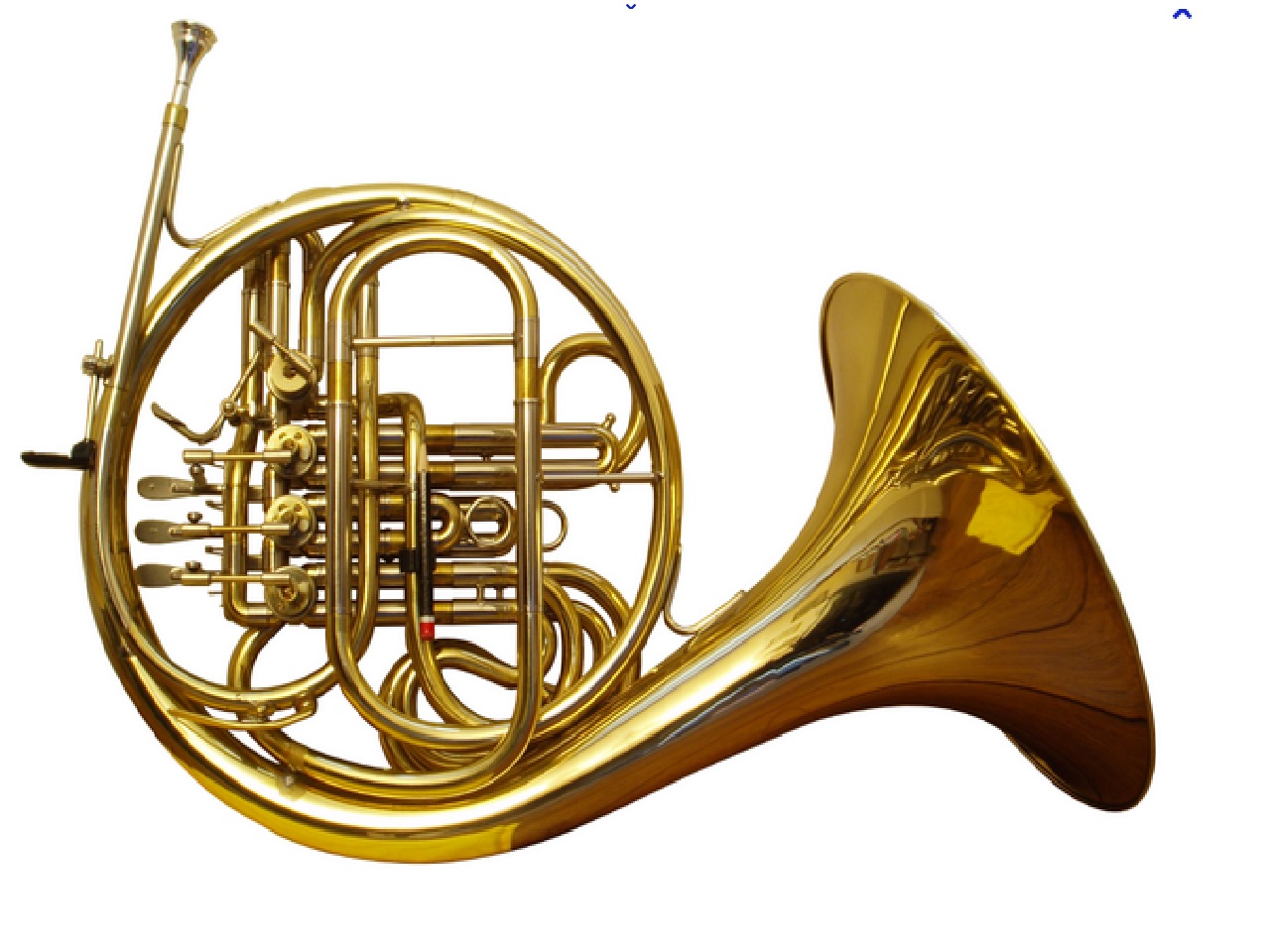
French Horn
English Horn
Horn is a kind of instrument, 中譯 號,角 or 號角. So French Horn is 法國号. Sometime it is also called 法國管. However, 管 usually is reserved for woodwind instruments (木管樂器) such as 單簧管 (clarinet),双簧管 (oboe),低音管 (bassoon) etc. The odd ball is English Horn. This instrument originated from France & something similar to Oboe, 屬木管樂器. So in reality, English Horn is neither English nor Horn. It is double reed, looks like oboe but longer and ends with an ellipsoid opening. You may have been to many concerts and seldom see an English Horn. The reason is that its opening always hides beneath the chair & its opening end is invisible. You might think it is an oboe as they sure look alike. But if you pay attention to the detail, you may discern the curve between the mouse piece & the body of the instrument. It is longer than oboe so its tone is lower and has its unique timber and mood. The best way to get familiar with this instrument is to see and hear it.


In this video clip, William Tell Overture, we don't see the opening of the English Horn as it is too long to show. The time line 0:00-2:44 is the third movement 'Pastoral' (牧歌:寂靜). You can picture a mockingbird (Flute) flying around and playing or communicating with a cow (English Horn).


This is another video clip that displays the performance of the English Horn,11:26 to 12:46. It is also interesting to watch English Horn from 20:06 to 20:34 and then a single violin (concert master) took over. He kept eye contacts with the conductor from time to time until 21:21 when all violins joined in. The story goes like this: Dvorak was very lonely while he composed this movement in a village of Czech in Iowa. He sobbed and chocked during the main theme (Bohemian tune) and had to use a violin to express his feeling and mood. Since violin hesitates, the timing of choke must be precise and so the eye contact required intently.

Little Big Horn
Texas Long Horn
You may ask since there are French Horn and English Horn, do we have German Horn or American Horn? It turns out that there is Little Big Horn in America. But most people don't like or want to mention it, a tragic experience. Fortunately there is Texas Long Horn. It is a long and exciting story if you are a Texan or a UT alumnus. There is German Horn that looks like Alpine Horn, very long. I tried once in Bavaria long time ago and found it hard to blow. Chinese Horn? Yes or no, it is Tibetan Long Horn played by Buddhist monks. 


One other horn used in Europe during 18th century is Post Horn (郵車号角). The most famous music related to post horn is Mozart's Post Horn Serenade. The instrument appears in Movement 6, Minuet (小步舞曲). This minuet is unique in its two trios (中段), one with Piccolo (短笛), the other with Post Horn (郵号).


Since a real post horn is hard to find, it is replaced by french horn in most orchestra. In this video clip, we can hear the post horn play from 33.30 to 35:08, second trio. Since the french horn is substituted for the post horn, we can hear the rich tone of the the instrument. The other solo instrument Piccolo can be heard from 32:20 to 33:04, in the first trio.


Let's turn to another type of horn for fun. It is Gabriel's Horn. Most of us are familiar with the picture of Archangel Gabriel blowing a horn. Some mathematicians figure that they can construct this horn better. The way to do is to integrate a curve 1/x around x-axis from 1 to a. But then someone asked a tricky question: what happen if 'a' goes to infinity as Garbiel's Horn can be very long? Here came a painter. He wanted to use Gabriel's Horn as his paint bucket. Since the volume of the horn is finite (integration of 1/x^2 converges) but the area is infinite (integration of 1/x diverges). The painter can't understand why he can't use his finite paint in the bucket to paint the surface of the horn which is infinite. After all, the surface of the bucket is just part of the volume. Here is the inconsistency between the math & the application. While we were Freshmen in 1960, Dr. Kuller never mentioned the story of Gabriel's Horn & its strange phenomenon. The textbook we used by Sherwood & Taylor also fails to mention this. Anyway, there may be many explanations for this paradox. My view is that actually it is not a paradox. Because the painter eventually found a way to paint the whole surface of the horn without running out of his paint in the horn. The trick is to use a special brush that can pick up the paint with any kind of thickness. Using concept of limit, when the thickness of the paint goes to 0, the area it can cover goes to infinity. In other words, x*y*z = A (constant), when z go to 0, x*y goes to infinity. It sounds as if 2-dimensional space can be viewed a special case of 3-dimensional space.

There are some other type of horn such as Cape Horn, Golden Horn (geographical), Hornblower (fictional naval officer) and Chinese Astronomical Horn (角宿). Two bright stars Arcturus (alpha star of Bootes, 牧夫座) & Spica (alpha star of Virgo, 室女座) are called 大角星 and 角星 in China. You can see these two bright stars in the summer night sky. Just extend the tail of the Big Bear (北斗七星), you will find a big yellow star, Arcturus. Extend further with same distance, you will find another bright star, Spica. In this month (August 2012) you can actually see planet Saturn and Mars near Spica within three hours after sunset. The three objects form almost an equilateral triangle. Both planets don't blink usually and the reddish one is Mars.

Saturday, July 28, 2012

清明上河圖


My father-in-law left me some antiques & I found a scroll of painting "清院本清明上河圖". I started exploring the subject & found the painting very fascinating. Then I found the five episodes of the presentation by 蔣勳 on the YouTube. This presentation is informative & easy to comprehend. The viewers can easily get into the topic & appreciate the painting with the action between history & art, painting & life etc. I have to admit that the art is one of the weakest link in our education. It is like music, we groped around the subject most of the time. It can best be described as 事倍功半. While I was in junior high, fortunately, I got hold on a book by 史惟亮, "音樂的創作與欣賞" & read some music magazines edited by 吳心柳 (his real name is 張繼高). With the help of some radio stations & records bought along 中華路, I became very fond of the classical music. It has become part of my life since then. It is amazing that a little booklet or some radio program created by someone can change your life. In the past decades, we had Andre Rieu & Sarah Brightman who popularizes the romantic music. It is a repackage of music to make it very attractive to the public & relate to our life more. In the realm of science, we had Carl Sagan who influenced the public with his famous TV series, "Cosmos".

I am glad now we have 蔣勳 who tries to elevate Chinese painting in a higher pedestal that we can all appreciate its value & meaning. The following is the link of the five episodes of "清明上河圖". With his presentation & YouTube, we don't have to go to Beijing to see the original painting & still be able to get a lot of details. I had visited Shanghai Expo & barely got a glimpse of the "動畫清明上河圖". It is nice to go to stadium to watch football, but it is much more satisfying & fulfilling to watch DVD for the replay & slow motion of the ball game while we have a cup of coffee in hand & enjoying the whole thing in our living room. When you watch these five episodes, pay attention to his comments on the history of Song Dynasty & 宋徽宗. We may not agree with his opinion but his view points are surely revealing & refreshing. Art is like music, without the background knowledge of history, society & artist's life, the art becomes lifeless & boring. Here are the links:


Thursday, June 28, 2012

我們的台北


五零年代的台北還是一個纯樸的小城. 中山北路巷的四條通,五條通還是大樹林蔭,長安東路和新生北路口還是綠綠葱葱,蛙嗚水流. 曾幾何時,高楼大厦,車水馬龍. 記憶中的台北,已经迅速消失. 滄海桑田,令人低迥不巳. 不过經歷一段混亂的陣痛,台北似乎以嶄新的姿態,耀眼的成績,挤入廿一世紀適合人居的大城市. 台北並且以旺盛的活力,擴張涵蓋週边的小鎮如士林,天母,北投,中和等等. 台北縣已经改名新北市.在不久的將來,無可避免的,新北市將併入台北成為大台北市,就像 Dallas 居民稱他們的城市 Greater Dallas.

台北的轉型是從捷運系统開始,這是交通的革命. 它的載流量和移動效率使它成為城市的主要交通工具. 輔以巴士,計程車和 scooter,構成一個完整的交通網. 小時常見的單車巳经完全消失,無影無踪. 我不知道這是好事還是坏事. 但我小時的樂趣之一是騎單車. 尤其是剛會騎時,那種輕飄飄的感覺是没有任何東西可以相提並論的. 會騎單車後,很自然的可以去騎 scooter 或 motorcycle. 現在單車絕跡,我在納悶我們的小孩子究竟是怎麼學骑 scooter? 每個人学骑單車一定會摔無数次的. Skip bicycle & go directly with scooter,摔起來一定不好受. 言歸正傳,現在買一張悠遊卡,踏上捷運,四通八達,真是 high mobility. 捷運站皆有 escalator 和空調. 人們皆有秩序的靠右边站,先讓人出再入車廂,有條不紊. 每幾分鐘就有一班車,使人不會爭先恐後,減少精神压力,造福不淺. 捷運站皆在交通輻輳之地,其地下通道正是过馬路捷徑. 大的捷運站皆有五六個出口,可以節省很多時間. 如果你常去 Las Vegas, 一定會有這种经驗,就是從這個 casino 到对面的 casino 常要費十幾分鐘的時間. 但如有地下通道,則五分鐘就到矣. 比較上海和北京,台北的捷運在秩序上遠遠勝出. 比諸香港,新加坡和東京,台北捷運的服務和設備也不遜色.

台北天氣濕熱,在街道走幾個 blocks 會汗流浹背,很不舒服. 但出捷運站,直徑半英里以內步行,可以忍受,遠之則以 計程車代步. 如是觀光台北,賞心悅目,很是方便. 捷運台北車站更有另一特色---地下街,Y, K, Z & R. 其中以R街最長. 這些地下街皆有空調,路面平直,各色店面,琳覽滿目,乃消費族天堂也. 另外如果想去重慶南路,可走Z街,直至 10号出口出地下街,完全空調,滴汗不流. 地下街並非台北專有,在 Toronto 和 Montreal 皆有地下通道. 居民在冬天可整日不見陽光和白雪,舒服地享受暖冬活動. 同樣的,台北人也可在颱風的肆虐下,悠遊地在地下街 shopping. 我在R街看到一條最長的書店,它好像是上海書城垂直七層水平攤開一樣,又有點像把所有重慶南路的書店接連起來一樣,令人嘆為觀止. R街是從台北車站沿著中山北路下面,一直到双連站, very impressive.

我的學校生涯大都在台北度過,台北影响了我,也造就了我. 可是那個台北是古老純樸的台北,而不是現今捷運摩登的台北. 日新和建中的紅楼尚在,其餘校舍,面目全改,再也找不到往日的摸樣和温馨的氣氛. 還依稀記得那首純樸的台北市歌,那是小学時,每次慶典常唱的曲子. 也不知什麼原因,在往後的日子裡,煙消雲散,再也不被人提起. 但是经过了半世紀,它卻還活在我的心版上. 我的記憶將隨著時光流逝,我要在忘記它以前把它寫下來.

原詞:
温暖的陽光下,依然矗立著斑駁的古城門.
它好像对我們告訴,劉壯肅公的功績猶存.
台北,台北,我們的台北.

新詞:
温暖的陽光下,到處豎立著嶄新的捷運站.
它好像对我們傾訴,勤奮市民的創新精神.
台北,台北,我們的台北.

Saturday, May 26, 2012

Tennessee Waltz

When we are getting older, we tend to think about some of our good old days. To me, one of them is Tennessee Waltz and Patti Page. Perhaps it is too old for our generation since my father-in-law also remembers this song very well. Strictly speaking we belongs to the decade of 1955-1965, a period that influenced us most. I remember the first time I heard 'Tennessee Waltz' was around the first year of my Junior High. Later I also heard 'Changing Partners'. Since I didn't know the title & lyrics of the songs, I had no idea what the content & meaning of the songs let alone Patti Page. Surprisingly, I always got confused about these two songs & mixed them up. When time went by, I entered the college & attended some dancing parties & found that these two songs always popped up. They are in waltz style and so I often waltzed around some girls with these two songs. This was our good old time & I always remember those moments up to these days. While I was in Oklahoma & people there told me they got a world famous singer Patti Page. I started to take note & found the good old Tennessee Waltz & Changing Partners. I am sure most of you are familiar with these two songs & so let's enjoy them again (重溫舊夢) and get familiar with the lyrics. It occurred to me that 'Tennessee Waltz' is a very sad song & 'Changing Partners' is much warmer to the heart. I will not mix them up any more.

(Tennessee Waltz)

You can see the lyrics of Tennessee Waltz by clicking 'Show more' button. By the way, 'I introduced him to my loved one' in the text should be 'I introduced her to my loved one'.

(Changing Partners)

Lyrics:
We were waltzin' together to a dreamy melody
When they called out "change partners"
And you waltzed away from me
Now my arms feel so empty as I gaze around the floor
And I'll keep on changing partners
Till I hold you once more
Though we danced for one moment and too soon we had to part
In that wonderful moment something happened to my heart
So I'll keep changing partners till you're in my arms and then
Oh, my darlin' I will never change partners again

[Instrumental Interlude]

Though we danced for one moment and too soon we had to part
In that wonderful moment something happened to my heart
So I'll keep changing partners till you're in my arms and then
Oh, my darlin' I will never change partners again

Patti Page was the best-selling female singer of the 1950s and has sold over 100 million records. Her 'Tennessee Waltz' recorded in 1950, was one of the biggest-selling singles of the twentieth century, and is also one of several official state songs of Tennessee. Page had anoter big hit 'Doggie in the Window'.


Patti Page is still around at age 84, living near San Diego in Southern California.

Wednesday, April 25, 2012

A Free New World


Since I came to America, I left all my books & personal belongings at home. The only thing significant I carried over the ocean was the memory in my brain. Since then I lost almost all my belongings at home due to the flood & family moving. In America I started a new life & gradually I collected physical things. Every time I move to a larger house, I collect more stuff, buy more furniture and so make each new move more difficult. One thing I notice well is my music collection. While I was in graduate schools, I was exposed to a lot of music over radio. Anyone living in Dallas, Texas knows WRR FM 101. It is a 24-hour classic music radio station. After a while of listening I started buying some music with my little saving. When time goes by I found that the media of the music keeps changing & so the hardware player changes too. I remember I bought some records and pretty soon a Wollensak reel tape player in 1967 & an Ampex reel tape recorder with many reels of Beethoven's music. Then came the age of cassette tape. I started to collect hundreds of cassette tapes from 1975 to 1985. And then came the age of CD & VHS (replace record & movie). Pretty soon I found that I collected hundreds of CD & VHS tapes and all the previous tapes (reel to reel & cassettes) were moved to garage. Since 1997, VHS was gradually replaced by DVD & I found that hundreds of VHS tapes were moved to garage as well. The only thing didn't change during all the time was the music contents & they are the only things I am really interested. With Apple's iPod, people suddenly can buy a single piece of music without committing to a CD with some other music that they are not really interested. With new technology, music is put in digital format & becomes a file that can be stored in electronic memory. I found that all my CD collections can be crammed into a 32G iPod & carried with me most of the time. With the late smart phone & cloud computing, it seems most of the information we need can be stored remotely in electronic forms. All we need is a smart mobile device to access the information. Nowadays when we buy books or music, we are given the options to download or save in some remote area called Cloud. Thus we no longer need to move books & physical media while we move to a new house. It also seems possible to make all furniture & cooking utensils some kind of utilities that is part of the standard house design. With this we can move around, stay or live anywhere in the world without moving anything physical except yourself. We thus almost achieve a complete personal freedom in our life, a Free New World indeed.

Saturday, March 24, 2012

Spring, A Fresh New World


Spring is here again & this is the First Spring of our Second Spring, 人生第二春的第一個春天. I look around & find that this is a fresh new world quite different from the one we used to have not long ago. The world changes so fast that we are overwhelmed physically & emotionally most of the time playing catch up games. Are these changes for the better or the worse? It depends on what & how you look at the world. For me, most of them are for the better although there are many bad side effects go along with them. The following is something that changes our life one way or the other.

Emails: Replace postal mails & stamps.
Google Search: Dramatically reduces the time in fetching information.
iTune/iPod: Changes the way we listen to music & the music distribution.
YouTube: Makes audio/video media available & shares among people.
Wikipedia/Online Dictionary: Replace encyclopedia & dictionary of book form.
Google Chrome: Makes multitasking run smoothly & effectively.
Amazon: Replaces department stores & book stores.
Skype: Reduces the cost of long distance call enormously.
Netflix: Changes the way we watch movie.
Fidelity/Vanguard: Changes the way we invest & manage money.
Internet: Replaces libraries as Internet behaves like a giant library.
Electronic News: Causes the decline of conventional newspapers.
GPS: Changes the way we drive & reduces the need of paper maps.
Google Map: Changes the way we see the world.
Expedia: Change the way we book airline tickets.

Several springs ago, I mentioned Schubert's "FruhlingsGlaube" (Faith in Spring). Let's listen to it again & hear the message:

Now, poor heart, be not afraid!
Now all, all must change.

Now, poor heart, forget thy pain!
Now all, all must change.


http://www.youtube.com/watch?v=E_WMgEu63FA

Spring is beautiful, spring is brilliant & spring is full of changes. Let's embrace & engage the spring as the poem from 徐志摩:

春,這勝利的睛空彷彿在你的耳邊私語,
春,你那快活的靈魂也彷彿在那裏迴響.